Caregiving robots are moving into tasks around older adults, from carrying supplies to helping with reminders and remote contact. Their value depends on the task, the setting, and how much human care remains in the loop.
- Robots can handle repeat tasks such as delivery, reminders, and simple monitoring.
- Physical help needs careful safety checks, especially around lifting and walking.
- Privacy, consent, repair, and staff training matter as much as the robot itself.
The jobs robots can handle
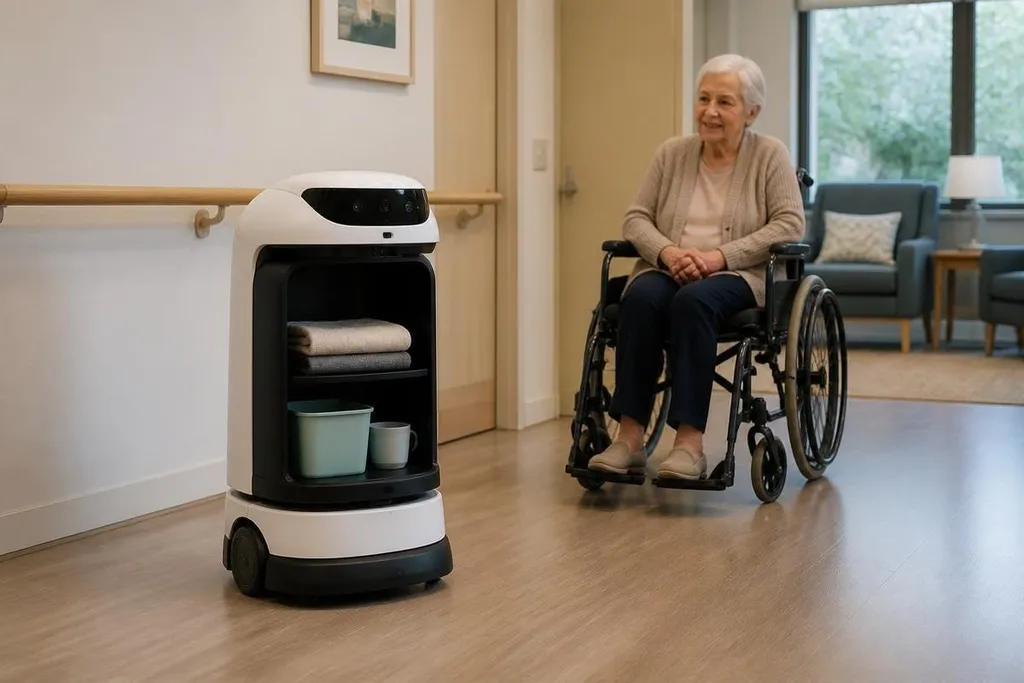
A care robot works best when the task has a clear start and finish. A mobile robot can carry food, medicine, laundry, or other items between rooms.
That can reduce walking for staff, but someone still needs to load the robot and check that the item reached the right person.
Reminder systems can prompt a resident about a meal, appointment, or medication schedule. A prompt can be useful when it connects to a care plan, yet it cannot decide whether a person is unwell, confused, or refusing help. A nurse or family member needs that information.
Robots with cameras, microphones, or other sensors can send alerts about a fall, a long period without movement, or a request for help. These systems need clear rules about who receives an alert and what happens after it arrives. An alert without a response plan adds noise rather than care.
Physical help needs a higher bar
Helping someone stand, transfer from a bed, or walk across a room puts people close to moving motors and rigid parts. The robot needs force limits, obstacle sensing, an accessible emergency stop, and a safe way to fail when a sensor loses track of the room.
That last point matters because elder care changes from minute to minute. A person may move slowly, use a walking frame, wear loose clothing, or reach for a nearby table. A robot trained for a clean test area may need help in a real room with chairs, visitors, bags, and medical equipment.
A lifting robot also needs a clear weight range and a stated method for each movement. “Helps with transfers” leaves too much unsaid. You need to know where the robot places its force, how it detects a person’s position, and what a caregiver must do during the move.
Human contact cannot be measured by task count
Routine work takes time, and robots may reduce some of that work. The saved time only helps residents if staff can spend it on conversation, checks, meals, and care that depends on judgment.
A video call robot can help a family member speak with a resident from another place. That may support contact, but it does not replace a person who notices a change in mood, appetite, or speech during an in-person visit.
One room is a small test for a care robot. A video can show the route, while a care home still needs evidence from different rooms and busy shifts. Robot24.com's elder-care robotics reporting can help separate a task shown on camera from a claim about safe daily use.
The hard limits
Privacy starts with the sensors. A camera in a bedroom, a microphone in a shared room, or location data tied to a resident can reveal sensitive details. Care providers need to state what the robot records, where it stores the data, who can view it, and when the system deletes it.
Consent also needs care. An older adult may agree to a robot during a trial and reject it later. Staff should be able to stop the system, and residents should have a clear way to refuse a task without losing human help.
Cost includes more than the purchase price. A care home must plan for charging, network access, software updates, cleaning, repairs, staff training, and a manual backup when the robot stops. I’d skip any system whose seller cannot explain those parts in plain language.
Check this before a trial
Use this list before placing a robot beside residents:
- Name the task: Write down the exact job, room, user, and expected result.
- Set the handoff: Decide which staff member responds when the robot stops or sends an alert.
- Test the room: Run the system around beds, walking frames, cables, doors, visitors, and poor lighting.
- Check consent: Give residents a clear way to pause, refuse, or end the robot’s use.
- Price the full service: Include training, repairs, data storage, charging, and staff time.
- Record failures: Log missed alerts, blocked paths, false alarms, and tasks that needed human help.
A useful trial should answer one narrow question, such as whether a delivery robot cuts staff walking time without delaying meals. If the result is unclear, the care home needs a better task definition before buying more units.
Caregiving robots can take on repeat work and carry information between people, but they cannot replace judgment, consent, or human attention. The next worthwhile step is a small trial with a written task, a named responder, and a failure log.